SAIL HO!
TO THE FARTHEST PORT OF THE RICH EAST
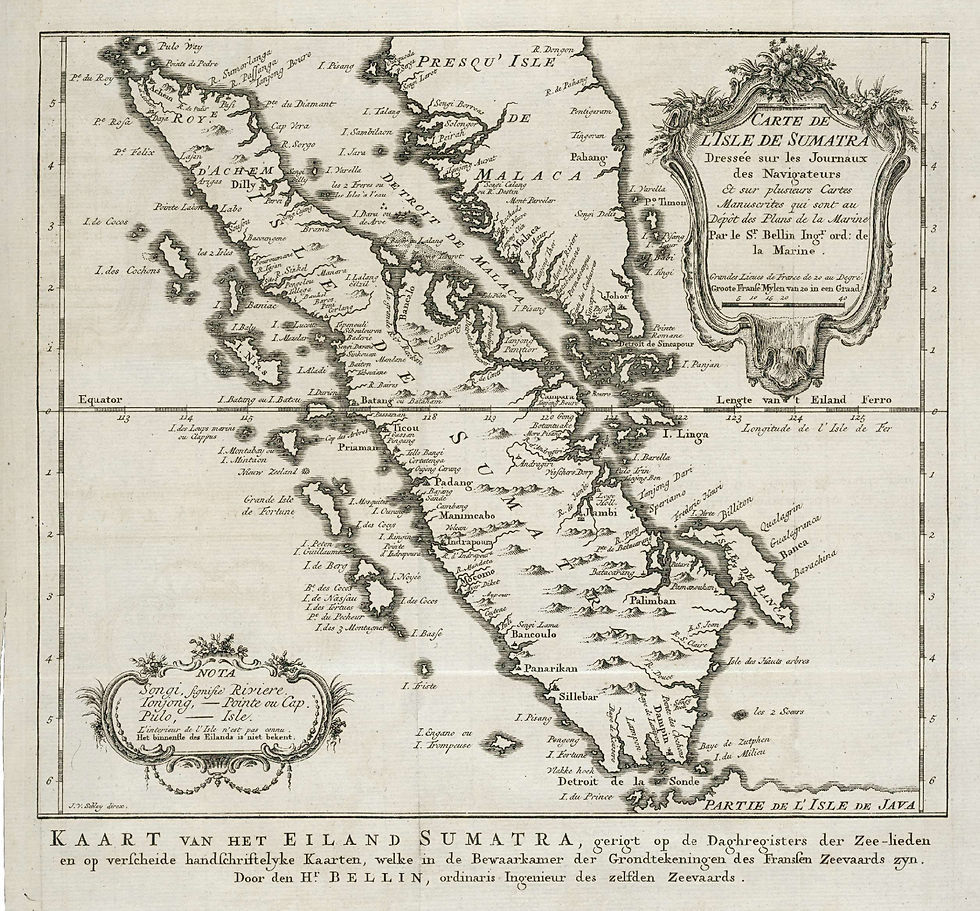
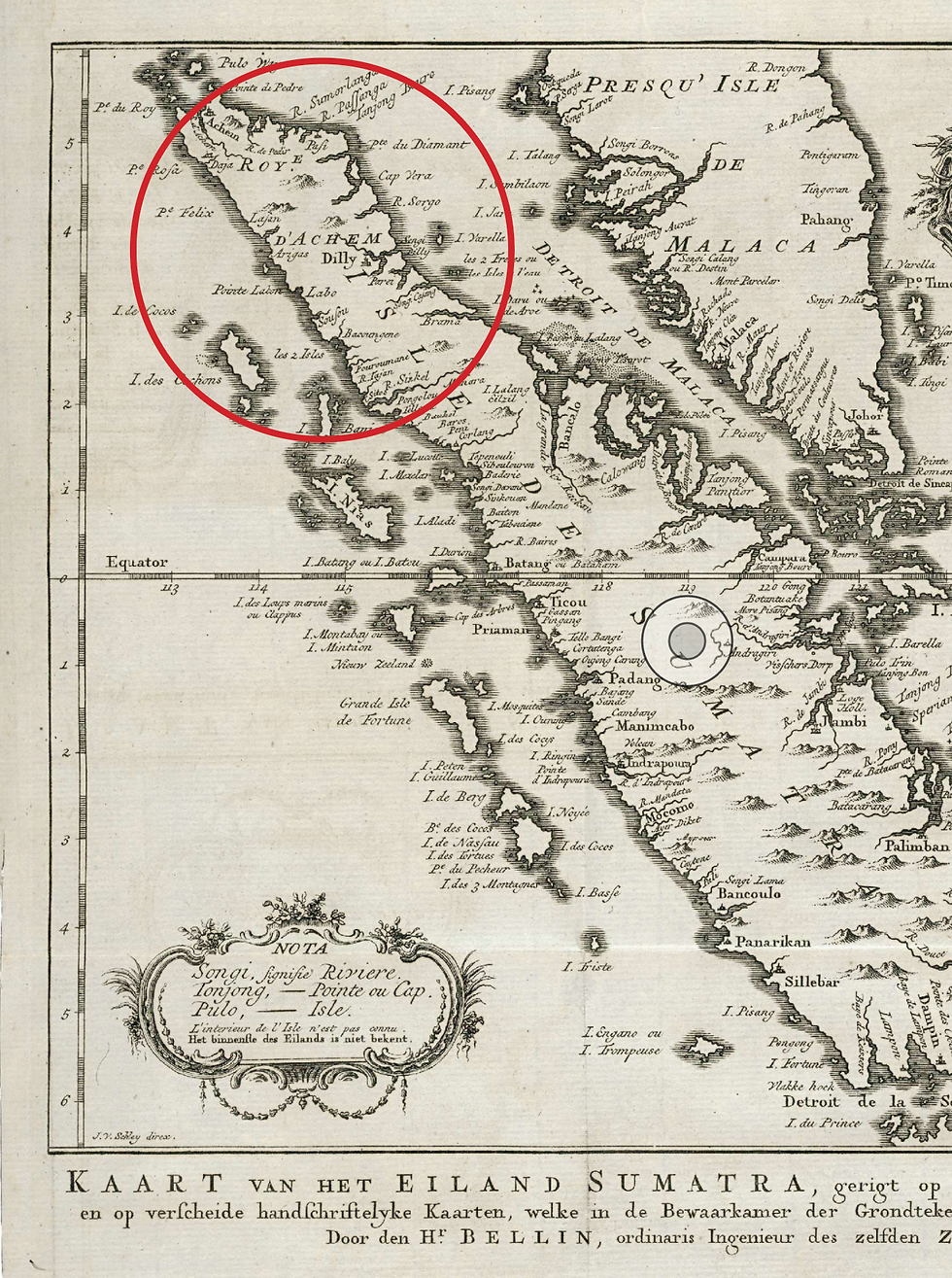
ACEH, SUMATRA
Location: The Pepper Coast
Evidence of the dynamics of interaction between Salem shipmasters, supercargoes, and other literate visitors to the Pepper Coast – and the regard in which the former held the latter – can be found in a number of log-books, journals, and published accounts. That source material makes it clear that relations between Salem seafarers and the merchants of Aceh’s west coast in the early 19th century cannot be simplistically characterized as ‘colonial encounters’.
No evidence exists of any attempts on the part of the Americans to establish settlements in Sumatra, nor of initiatives to build fortified trading stations, or to use the force of arms to secure favorable trading terms.
Since the turn of the 19th century, Salem traders had established close relationships with Sumatran merchants that were mutually beneficial and built upon significant trust. Referring to the Sumatran trade in an 1815 address to Congress, Thomas Perkins made a point to note that: “The Malays on the Coast of Sumatra are trusted with large sums”42 – and this trust was also expressed in a range of gestures, statements and actions that were remarkably progressive for that time.
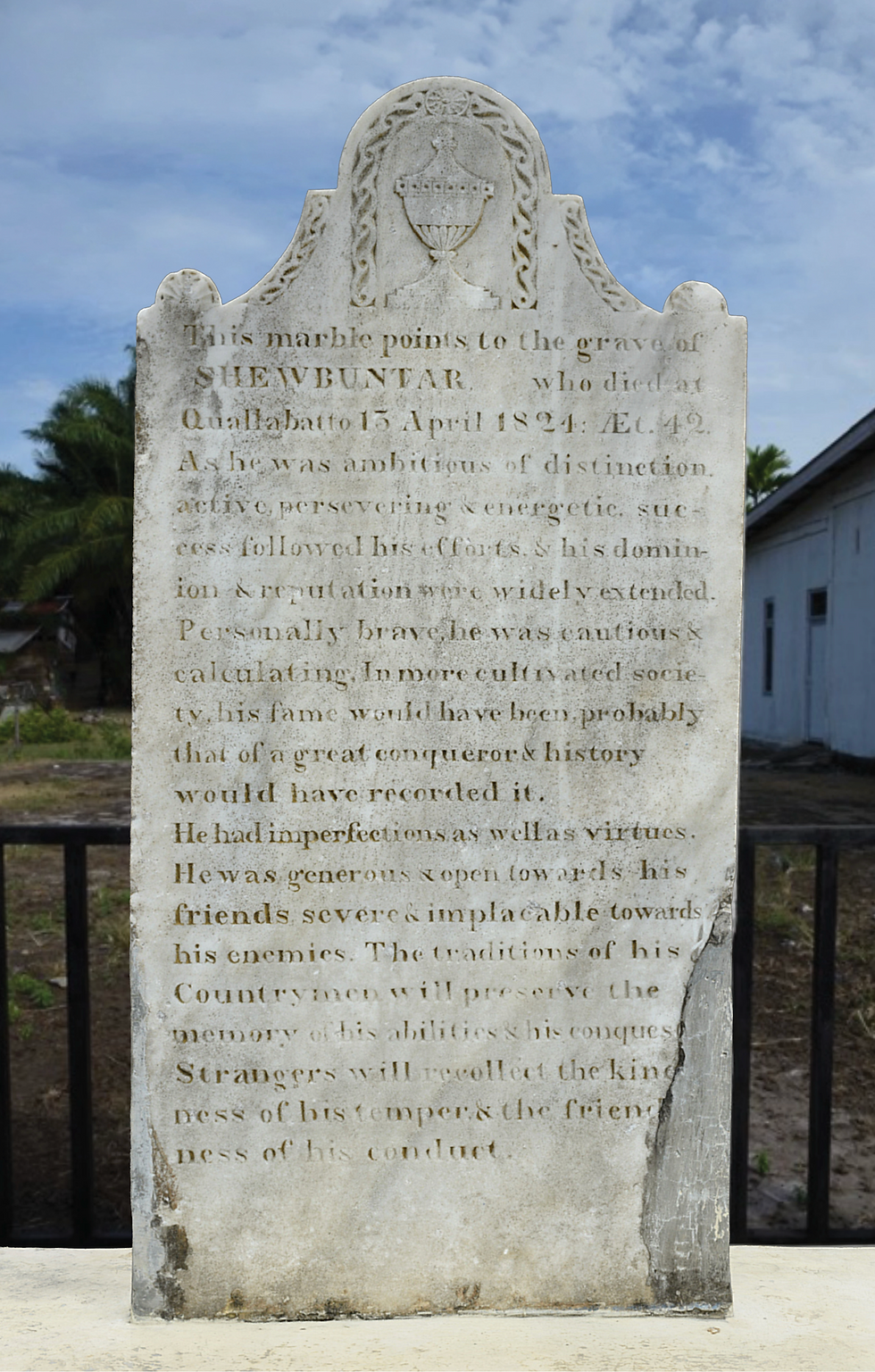
Shewbuntar's Memorial
Location: Aceh
Material: Marble
Year: 1824
This marble gravestone still standing in the west coast of Aceh, and honors the memory of one Shewbuntar, who died at the Sumatran pepper port in 1824.
It was carved by a Salem stonecutter and shipped halfway around the world to honor his memory.
The epitaph is rather touching:
“This marble points to the grave of SHEWBUNTAR who died at Quallabatto 13 April 1824Æt. 42. As he was ambitious of distinction, active, persevering & energetic, success followed his efforts and his dominion & reputation was widely extended. Personally brave he was cautious & calculating. In more cultivated society, his fame would have been probably that of a great conqueror & history would have recorded it. He had imperfections as well as virtues. He was generous & open towards his friends severe & implacable towards his enemies. The traditions of his Countrymen will preserve the memory of his abilities and his conquests. Strangers will recollect the kindness of his temper & the friendliness of his conduct.”
Clearly Shebuntar's Salem counterparts had developed a deep personal relationship that exceeded straight forward business transactions.
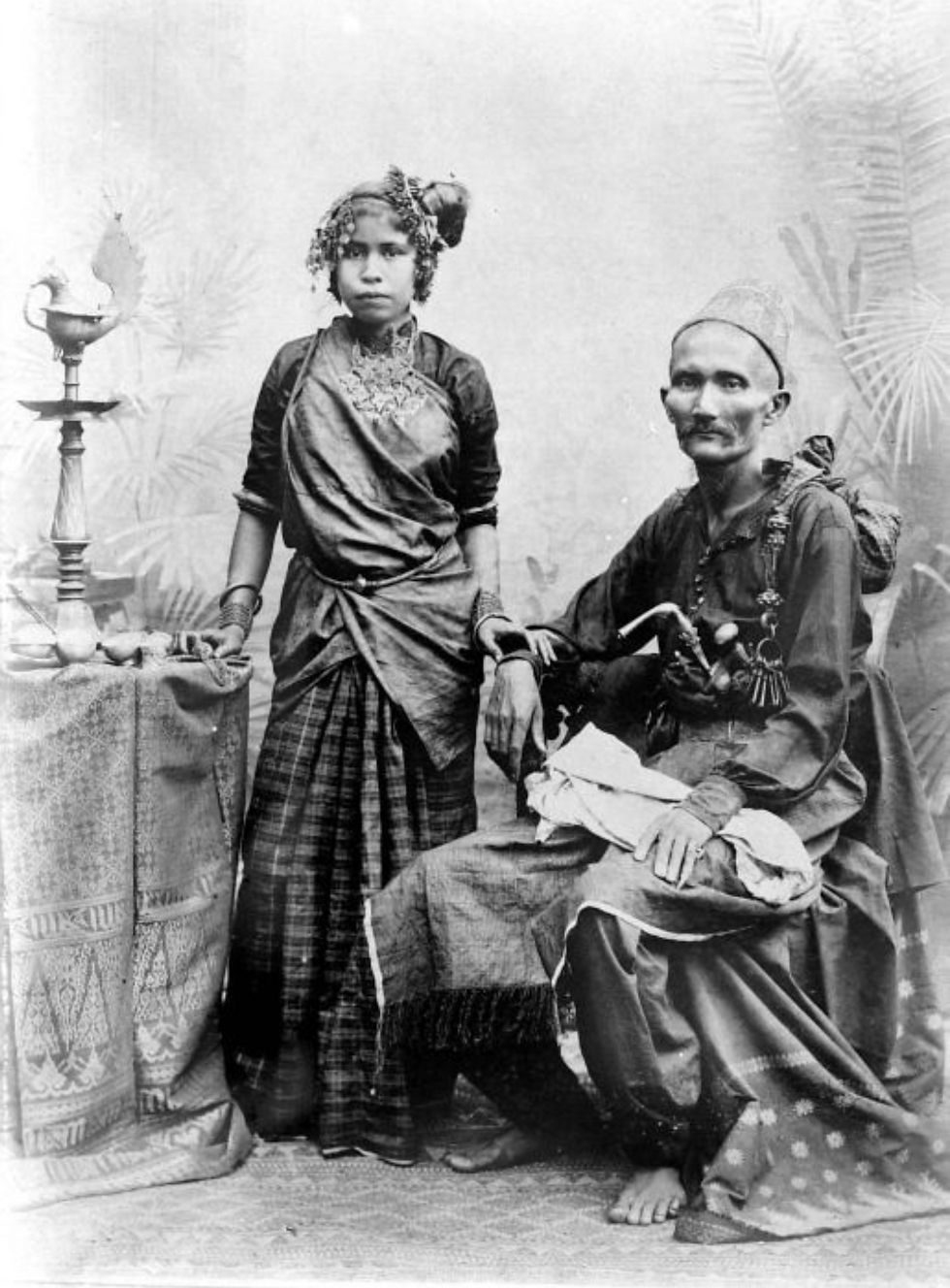
Historical Attire
The dress of the figure on the seal which has been deemed by some contemporary critics in Salem as presenting a racist stereotype thus actually reflects quite specific Sumatran traditions. According to Dane Morrison, Ph. D., Professor Emeritus of Early American History at Salem State University, "A close visual examination of the original seal reveals that the image did not employ racist images that were common to the early nineteenth century and earlier, such as a lack of clothing associated with ‘savagery’ or ‘barbarism,’... the Salem seal depicted a fully clothed figure in what was known as the traditional garments of Sumatran rajahs at the time…”The clothing depicted was not an exaggerated distortion that would meet the level of ‘caricature’.
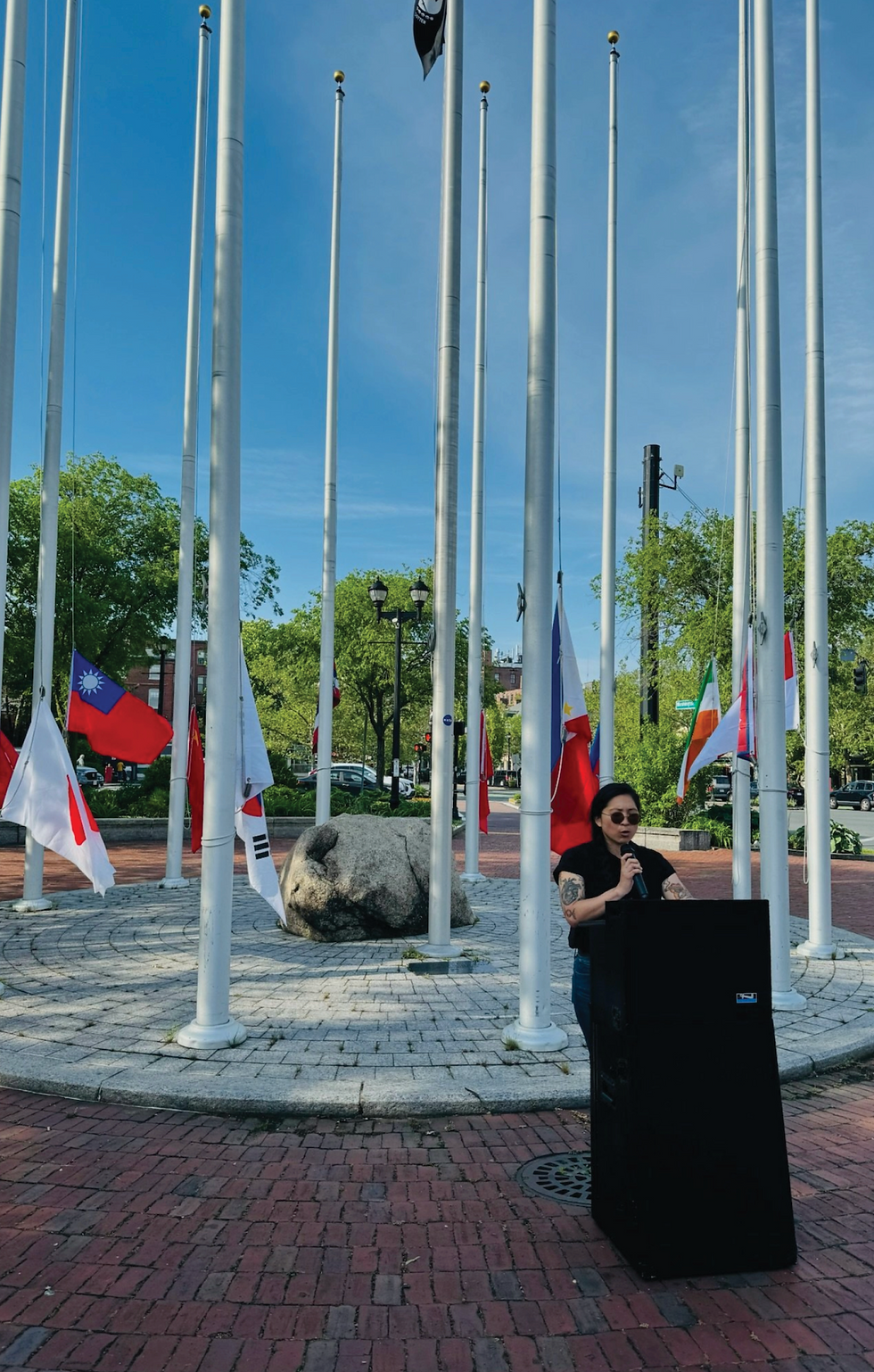
THE AAPI
The North Shore Asian American and Pacific Islander Coalition (AAPI) does not speak for the entire city. With a population of roughly 48,000 residents, the AAPI has less than 50 members.
The former director, Flora TonThat has spread inaccurate information aimed at dividing a city.
In a June 2024 Newsletter, the AAPI claimed that the Sumatran man is "like a prized trophy (think deer antler head hanging over the center of a mantle).
''To the farthest port of the rich east' reads like a boasting of we've gone to the farthest of anyone in the world and conquered this other type of people you rarely see and that's why we put him there for everyone to see."
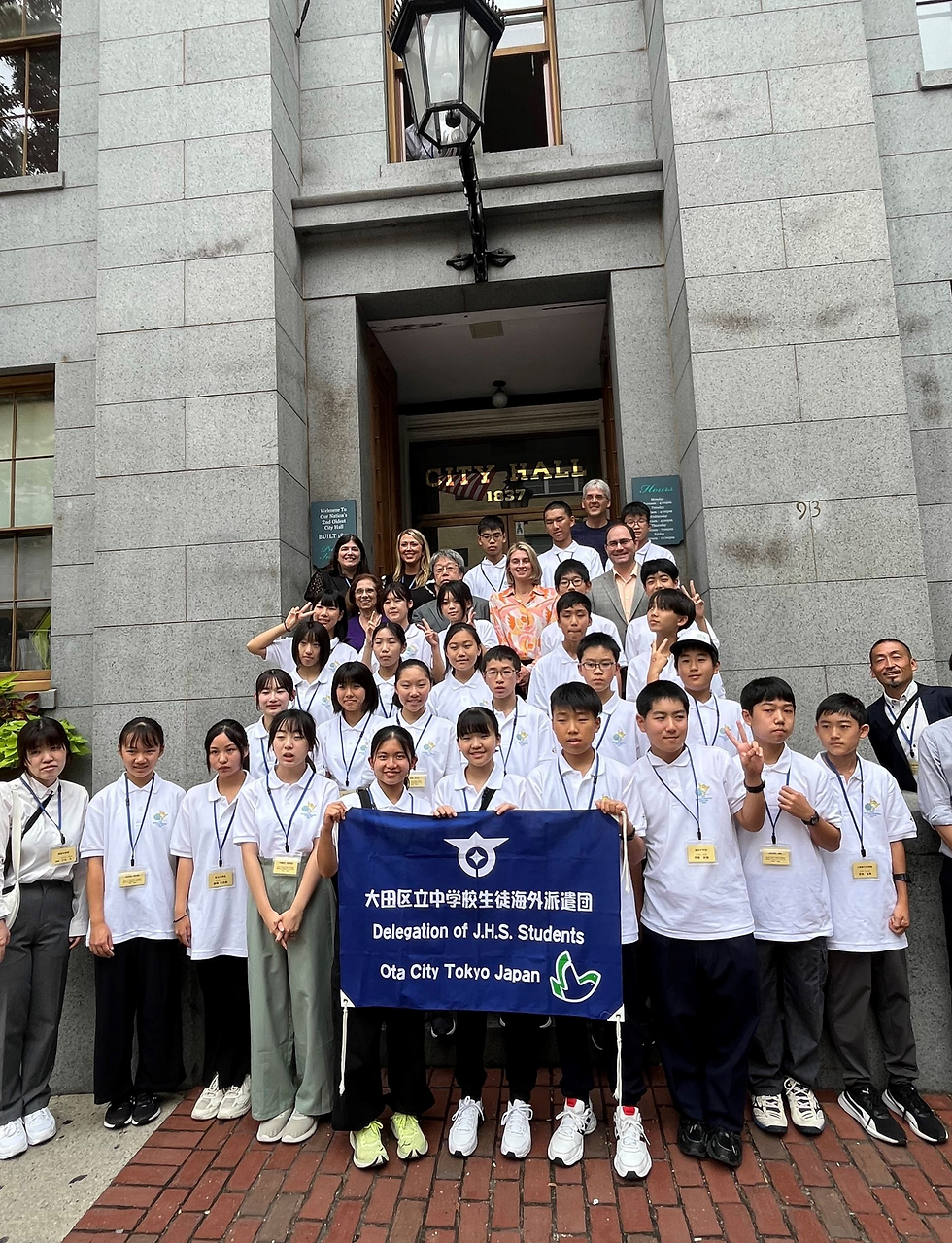
LOVE FOR A DIVERSE COMMUNITY
Since 1993, Salem has been running an exchange program with children from Ota, which is formally recognized as Salem's Japanese Sister city.
Every year, the PEM holds events to celebrate the Chinese New Year, the Japanese Obon festival, and Korean folk music and dances.
They also have the Yin Yu Tang House, an entire floor dedicated to Asian exports, with separate galleries display artworks from India, Korea, and Japan.